
A Salford schoolgirl’s invention to help people with dyslexia read more easily has won a prestigious award and caught the attention of the NHS.
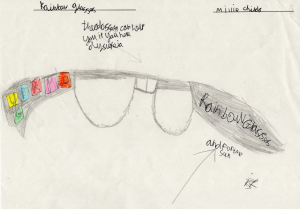
Millie Childs, 11, developed the idea for “Rainbow Glasses” while she was a pupil at Light Oaks Junior School.
The colour-changing glasses use adjustable coloured lenses to reduce visual stress and improve reading comfort, with the colour shifting between red, green and blue depending on the user’s needs.
The design began as an entry to Primary Engineer, a UK-wide STEM competition encouraging young people to solve real-world challenges. Professional engineers selected Millie’s concept to be built into a working prototype, which was developed over seven months by Thales UK in Cheadle.

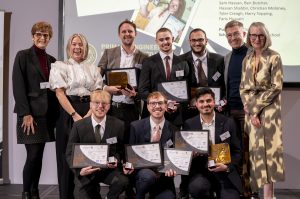
Last week Millie received the Gold Award in the Primary Engineer MacRobert Medal, the sister accolade to the UK’s most prestigious engineering prize, the MacRobert Award.
Millie said: “Reading has always been a challenge for me, so I wanted to invent something that could make it easier. Seeing engineers turn my idea into real glasses has been incredible. I’m really proud to think they might one day help other people with dyslexia.”
Millie’s journey has also been an emotional one for her family. Her mum, Sarah, said the experience has transformed her daughter’s confidence.
“Millie has loved every second of this,” she said. “It’s motivated her so much and made her hopeful about her future. Her grandad was an engineer and she’s always wanted to work in that sector now it feels real for her.”
When Millie returned to Light Oaks Junior School this week, she was welcomed back as a role model for younger pupils.
Headteacher Zandra Wilkinson said her success has had a powerful impact across the school community.
She said: “This shows our pupils that their ideas matter and that engineering is creative. Millie has proven what’s possible and we could not be more proud.”
Engineers who worked on the build also praised Millie’s vision. During the prototype reveal earlier this year, the team said they were approached by an NHS representative interested in whether the design could progress further
 .
.
While there is currently no formal pathway to NHS adoption, the team behind the project hope the prototype might mark the beginning of wider development.
For now, Millie says she is simply excited about the future and wants other children with dyslexia to know that learning challenges don’t limit potential.
“I used to find reading scary. Now I feel like I can help other people who feel the same way,” she said.
UK schools and teachers can register for the Primary Engineer competition at leadersaward.com/the-competition.
To Listen To Interview With Natasha Kinnear At Primary Engineer Click Here: https://youtube.com/shorts/-6iEiRysTpg?feature=share


